
Nanofiltration Hydranautics

High performance energy savings ESNA (Energy Saving Nanofiltration) nanofiltration membrane elements are ideal for softening applications and the removal of pesticides, bacteria or viruses. They provide 50%-90% salt rejection with ultra-low-pressure operations, increased energy savings, and significantly lower installation and operating costs. They can effectively remove organics which can form disinfection by-products in municipal water distribution lines. At the Boca Raton plant the THM formation potential was reduced from 0.6 mg/L to less than 0.020 mg/L, well below the 0.042 mg/L limit.
A New Generation of ESNA Performance
ESNA1-LF are high performance nanofiltration membranes ideal for softening applications and the removal of pesticides, bacteria or viruses. They provide 50%-90% salt rejection with ultra-low-pressure operations, increased energy savings, and significantly lower installation and operating costs.
ESNA1-LF significantly reduces operating costs and provides optimum hardness rejection for softening applications, available in 4-inch and 8-inch diameter configurations
ESNA1-LF2 are designed to provide high rejection of natural organic materials and moderate rejection of total hardness, while running below 100 psi, offering energy and cost savings.
| Model No. | Size (Dia.”× Length”) |
Flow Rate | Test Pressure (psi) | Nominal CaCl2 Rejection (%) | Minimum CaCl2 Rejection (%) | |
| gpd | m³/d | |||||
| ESNA1-LF-LD-4040 | 4” × 40” | 1,700 | 6.4 | 75 | 89 | 86 |
| ESNA1-LF2-LD-4040 | 4” × 40” | 2,000 | 7.6 | 75 | 86 | 83 |
| ESNA1-LF-LD | 8” × 40” | 8,200 | 31.0 | 75 | 89 | 86 |
| ESNA1-LF2-LD | 8” × 40” | 10,500 | 39.7 | 75 | 86 | 83 |
Please see product specification sheets for the test conditions under which the stated performance are based, and exact membrane element dimensions.
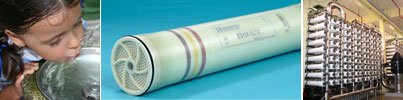
- Up to 91% nominal rejection
- Effectively removes organics
- Optimum hardness rejection
- Ultra-low pressure, energy saving, lower OPEX
- New technology for higher productivity; minimizes bio-fouling and colloidal fouling and enhancing cleanability
- Enhanced Membrane Chemistry for Increased Chemical Resistance
- Innovative Spacer Design to Minimize Trapping of Small Colloidal Particles
- HYDRAblock Technology Providing Biostatic Properties to Minimize Proliferation of Biological Fouling
- Proprietary Vented Seal Carrier to Eliminate Pressure-Shock Damage During System Startup
- Municipal Water Treatment
- Softening Applications
- Removal of Pesticides, Bacteria or Viruses