Laboratory
Choose the right lab water system for your research. From Type III RO to Type I ultrapure water, we provide reliable, compliant solutions for every application.
IInvisible contaminants in water—ions, organics, bacteria, endotoxins—can skew data, ruin sensitive assays, damage expensive instrumentation, and compromise years of research. Controlling water quality is controlling your scientific outcomes.
Every experiment, every analysis, every result depends on it. We deliver water purification systems that guarantee the precise quality your work demands, backed by global remote support.
Not All Water is Created Equal
International standards define water purity by grade. Selecting the correct grade is the first critical step to ensuring experimental integrity and cost-effectiveness.
| Parameter | Type III | Type II | Type I |
| Resistivity (MΩ·cm) | >0.05 | >1 | 18.25 |
| TOC (ppb) | < 500 | < 50 | < 5 – 10 |
| Bacteria (CFU/mL) | < 100 | < 10 | < 1 |
| Endotoxins (EU/mL) | N/A | < 0.25 | < 0.001 |
| Main Use | Rinsing, feeding autoclaves & humidifiers | Buffers, media, analytical instruments (HPLC, IC, AA) | Critical applications: LC-MS, cell culture, molecular biology |
Relevant Technologies
Many failed experiments aren’t caused by poor methods — they’re caused by poor water. Invisible contaminants like nucleases, endotoxins, trace organics (TOC), and residual ions quietly undermine qPCR, LC-MS, and protein research. Hitting 18.2 MΩ·cm alone is not enough. All Refine’s ultrapure water solutions control every critical parameter — from ions and TOC to endotoxins and microbes — so every drop of water supports reliable, reproducible science.
Absolute purity for the most sensitive work. Our ultrapure systems deliver 18.2 MΩ·cm water with <5 ppb TOC & <0.001 EU/mL endotoxin. Perfect for LC-MS, cell culture, PCR.
The Purification Process
- Pure Feed: Starts with high-quality Type II water (from an RO/EDI system).
- Final Polishing: Passes through a high-capacity, ultra-pure ion-exchange cartridge to scavenge the last ions.
- Organics Destruction: A 185/254 nm UV photo-oxidation lamp breaks down organic molecules into ions for removal.
- Ultimate Filtration: A 0.22 µm (or 0.1 µm) ultrafilter at the point-of-use removes bacteria, particles, and critically, endotoxins and nucleases.
- Point-of-Use Design: Water is polished and dispensed instantly. No storage, no degradation, no contamination risk.
Guaranteed Your Water Quality
- Resistivity: 18.2 MΩ·cm at 25°C (Theoretical Maximum)
- TOC: < 5 ppb (Routine), < 1 ppb (Optional)
- Bacteria: < 1 CFU/mL
- Endotoxins: < 0.001 EU/mL
- Nucleases: Not detected (tested by PCR)
- Standards: Exceeds requirements for ASTM Type I, CLSI, and ISO 3696.
The High Cost of Impure Water in Analysis
Organic contaminants (TOC) cause ghost peaks and elevated baselines in HPLC/UPLC. Ions degrade columns and interfere in Ion Chromatography (IC). Even certified “HPLC-grade” water can vary between batches and is prone to contamination after opening.
Our Solution: Continuous Electrodeionization (RO/EDI)
We combine Reverse Osmosis (RO) with Electrodeionization (EDI). RO removes the bulk of contaminants. Then, EDI uses electricity—not chemical regeneration—to continuously polish the water, removing residual ions to produce high-resistivity, ultra-low TOC water.
- Advantage over Cartridges: No downtime for regeneration, no handling of corrosive chemicals, consistent quality 24/7.
- System Design: Modular components allow for customization: pre-treatment, storage tanks, UV lamps for TOC reduction, and final filtration.
Remote Management via Mole Cloud™
Connect your system to our secure portal. View real-time water quality, track consumable life (pre-filters, UV lamp), receive predictive maintenance alerts, and enable remote diagnostics by Mole engineers—crucial for multi-site or after-hours support.
- Integrated Data Logging: Continuously records resistivity, TOC, temperature, and system status. Export data for audits.
- User Access Control: Password protection and user levels to control system settings.
- Validation Support: Full documentation packages (DQ, IQ, OQ, PQ) and SOP templates available.
- Alarms & SIP/CIP: Audible/visual alarms for out-of-spec water. Optional sanitization cycles.
Water Quality Defined by Global Standards
- Resistivity: > 10–15 MΩ·cm at 25°C (Exceeds Type I requirement for some standards)
- TOC: < 10–30 ppb (with UV option)
- Bacteria: < 1–10 CFU/mL
- Endotoxins: < 0.001–0.25 EU/mL (Depending on configuration)
- Standards Compliance: Designed to meet ASTM Type II, CLSI, and USP Purified Water specifications.
Cost-effective, high-volume primary grade (Type III) water. Our RO systems produce consistent water for rinsing, feeding autoclaves & more. Durable, low-maintenance design.
Replace unreliable tap water and inefficient stills. Our Reverse Osmosis (RO) systems deliver a consistent, high-purity stream for all your non-critical applications, saving time and money.
Advanced Reverse Osmosis Technology
Reverse Osmosis forces water through a semi-permeable membrane, rejecting over 99% of dissolved ions, particles, organics, and microorganisms. Our systems incorporate robust pre-filtration (sediment, carbon) to protect the RO membrane and ensure long life.
- High Recovery Rates: Advanced design minimizes wastewater.
- Built-in Monitoring: Real-time conductivity measurement and TDS display ensure water quality at a glance.
- Automated Operation & Flushing: Maintains membrane health during idle periods.
- Tank & Pump Options: Integrated storage tanks and delivery pumps for constant pressure and volume.
Smart Monitoring & Remote Support
Even our Type III systems can be equipped with connectivity. Monitor system status, filter life, and water quality remotely. Receive predictive alerts for filter changes, preventing unexpected downtime.
Water Quality You Can Standardize On
- Conductivity: < 5–20 µS/cm (Customizable)
- TOC: < 500 ppb
- Particles: > 0.22 µm removed
- Bacteria: > 99% reduction
- Flow Rates: Available from 10 L/h to over 1,000 L/h to match demand.
Remote Management via Mole Cloud™
- Liquid Chromatography-Mass Spectrometry (LC-MS, LC-MS/MS): Mobile phase and sample preparation for maximal sensitivity.
- Mammalian & Stem Cell Culture: Ensuring cell viability, growth, and authentic phenotypic expression.
- Molecular Biology: PCR, qPCR, sequencing, cloning, and microarray analysis.
- Protein Biochemistry: 2D electrophoresis, protein purification, crystallization, and structural studies.Trace Element Analysis (ICP-MS): Blank and calibration standard preparation.
Glassware rinsing, steam generators, and environmental chambers
Type III (RO) Water
General lab reagents, buffers, media prep, analytical instruments (HPLC, IC, AA, spectroscopy).
Type II (Pure) Water
Sensitive biological assays (cell culture, PCR, sequencing), advanced analytics (LC-MS, ICP-MS)
Type I (Ultrapure) Water
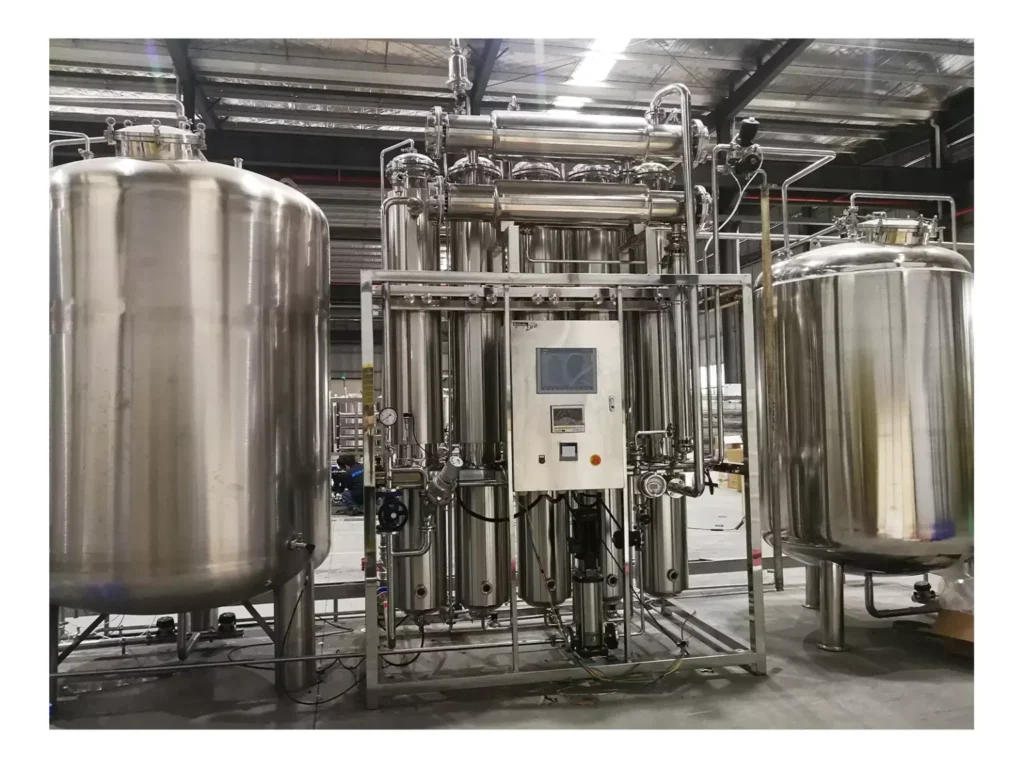
Features of Purified RO EDI Water Plant
More Benifits for our clients
Smart Connected Systems: All our units feature intelligent monitors that track water quality, consumable life, and usage in real-time. Access data and receive alerts remotely via the Mole Cloud™ Portal.
Compliance Made Simple: We provide full documentation packages (IQ/OQ), validation protocols, and data logging features designed to streamline audits and meet global standards.
Remote Diagnostics & Support: Our global team can perform remote diagnostics, troubleshoot issues, and guide your staff, minimizing downtime no matter your location.